7 Essential Power Distribution Systems for Reliable Electricity
Electricity powers our modern world, and at the heart of its journey from generation plants to end-users lies the Power Distribution System. Whether it’s supplying homes, industries, or large-scale infrastructures, power distribution systems ensure that energy is delivered safely, efficiently, and reliably.
In this guide, we’ll explore the definition, components, types, importance, challenges, and future trends of power distribution systems. By the end, you’ll understand why they are a backbone of global infrastructure.
What is a Power Distribution System?
A power distribution system is the final stage of the electrical power supply chain. After electricity is generated at power plants and transmitted through high-voltage transmission lines, it enters the distribution network.
This system reduces high-voltage electricity into usable voltage levels and delivers it to:
Residential homes
Commercial complexes
Industrial plants
Railways, airports, and defense infrastructures
Simply put, without efficient power distribution systems, the electricity generated cannot reach end-users in a safe and reliable manner, you can visit the official power distribution system (external link).
Why Are Power Distribution Systems Important?
Power distribution systems are 5 crucial for several reasons:
Safety: Reduces high-voltage current to safe levels for users.
Reliability: Prevents blackouts, surges, and unstable supply.
Efficiency: Minimizes energy losses during transmission.
Scalability: Supports growing demand in industries and cities.
Integration: Connects renewable energy (solar, wind) to existing grids.
Our goal is to provide a customized solution that perfectly fits your unique project requirements. To learn more about our other services, such as our power distribution systems (internal link), please visit our website.
1. Understanding Power Distribution and Utilization
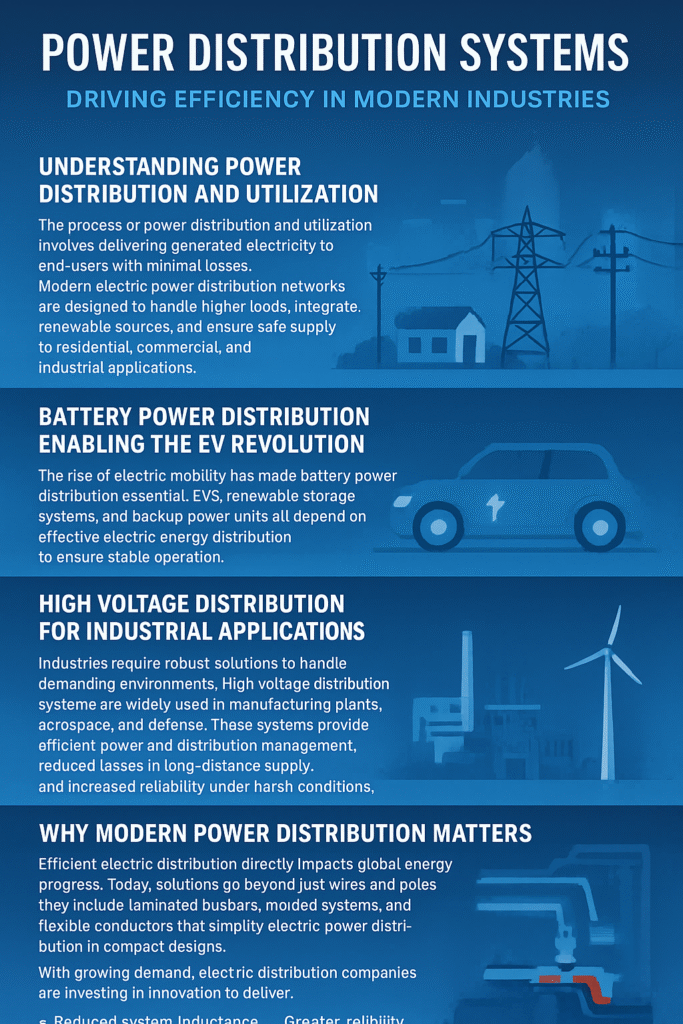
The process of power distribution and utilization involves delivering generated electricity to end-users with minimal losses. Modern electric power distribution networks are designed to handle higher loads, integrate renewable sources, and ensure safe supply to residential, commercial, and industrial applications.
Whether it’s power redistribution in complex grids or distribution in electrical power systems, the objective remains the same: efficiency, reliability, and safety.
2. Battery Power Distribution: Enabling the EV Revolution
The rise of electric mobility has made battery power distribution essential. EVs, renewable storage systems, and backup power units all depend on effective electric energy distribution to ensure stable operation.
Busbars, smart controllers, and advanced designs now allow seamless integration of batteries into electric distribution networks, reducing wiring complexity and improving efficiency.
3. High Voltage Distribution for Industrial Applications
Industries require robust solutions to handle demanding environments. High voltage distribution systems are widely used in manufacturing plants, aerospace, and defense. These systems provide:
• Efficient power and distribution management
• Reduced losses in long-distance supply
• Increased reliability under harsh conditions
By adopting high voltage distribution systems, industries ensure consistent performance in mission-critical operations.
4. Renewable Energy Distributors and the Future of Power
The shift toward sustainability is creating opportunities for renewable energy distributors. From solar farms to wind energy systems, integrating clean energy into the grid requires advanced distribution in electrical power systems.
This makes the production and distribution of electricity not only more eco-friendly but also more cost-effective in the long run.
Why Modern Power Distribution Matters
Efficient electric distribution directly impacts global energy progress. Today, solutions go beyond just wires and poles—they include laminated busbars, molded systems, and flexible conductors that simplify electric power distribution in compact designs.
With growing demand, electric distribution companies are investing in innovation to deliver:
• Reduced system inductance
• Greater reliability
• Compact and modular solutions.
Frequently Asked Questions (FAQs)
Q1: What is a power distribution system?
It is the network that delivers electricity from substations to end-users like homes, offices, and industries.
Q2: What are the types of power distribution systems?
Radial, ring main, and interconnected distribution systems.
Q3: How is the future of power distribution evolving?
With smart grids, renewable integration, AI, and IoT-based monitoring systems.
Q4: What is the difference between transmission and distribution?
Transmission moves electricity over long distances at high voltages; distribution delivers it to users at usable voltages.
Conclusion
From battery power distribution in EVs to high voltage distribution in heavy industries, the future of power distribution and utilization is smarter, greener, and more efficient. The ongoing evolution in distribution systems ensures that the production and distribution of electricity keeps pace with global demands while supporting renewable adoption.
As renewable energy distributors and electric distribution companies continue to innovate, the world moves toward a more reliable and sustainable energy future.